
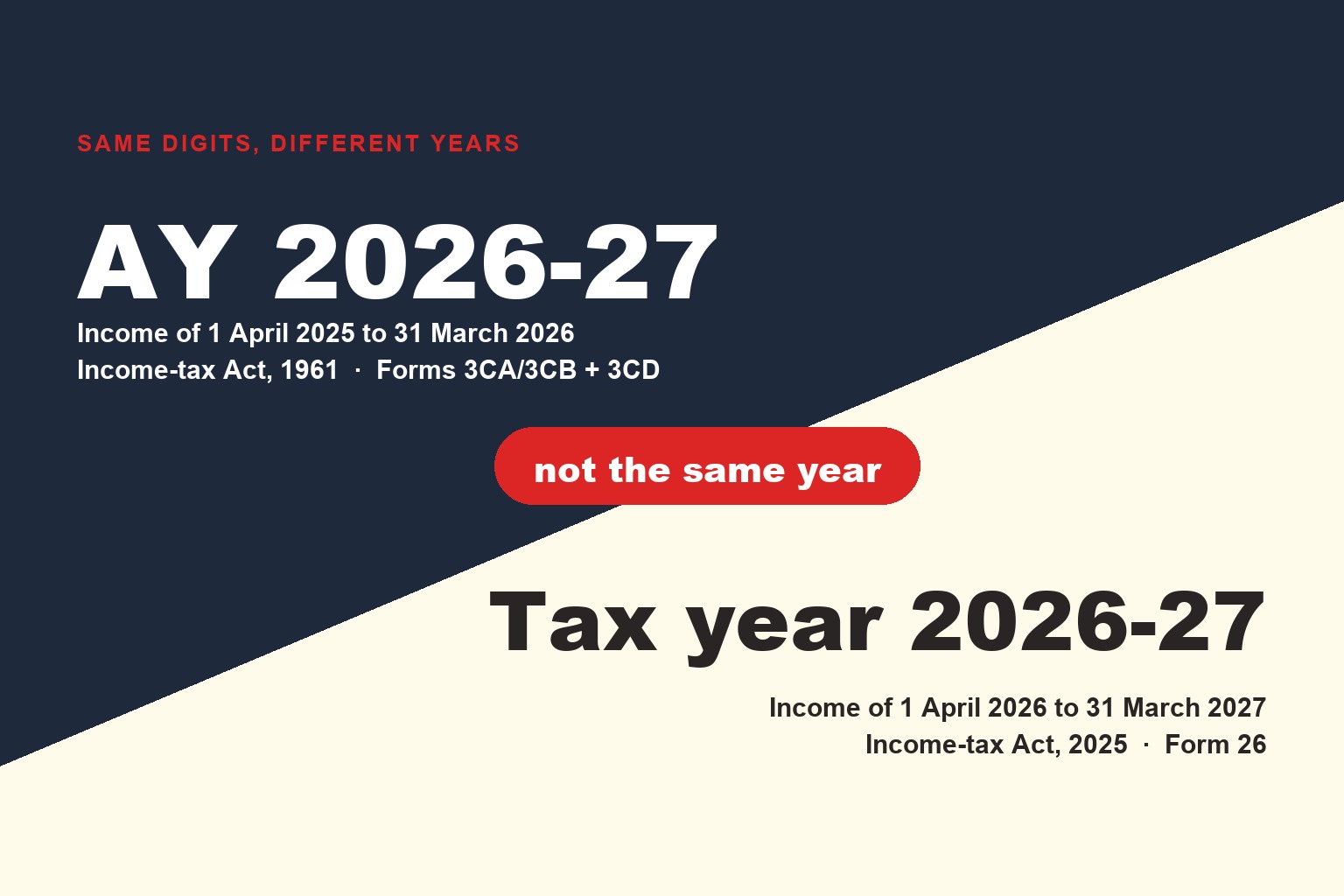

TL;DR: AY 2026-27 and tax year 2026-27 are not the same year. AY 2026-27 is the income you earned between 1 April 2025 and 31 March 2026, assessed under the Income-tax Act, 1961: that is the return you filed or are filing in 2026, the tax audit due on 30 September 2026 on Forms 3CA/3CB and 3CD, and any belated or revised return by 31 December 2026 or before the assessment is completed, whichever is earlier. Tax year 2026-27 is the income you are earning between 1 April 2026 and 31 March 2027, governed by the Income-tax Act, 2025: that is the advance tax you pay this month, the TDS being deducted on your April-onwards income, and a tax audit on the new Form 26 that is not due until 30 September 2027. The digits collide because the old Act named a year after the year in which income was assessed and the new Act names it after the year in which income is earned. The rule that resolves the return and the audit: the period in which the income was earned decides the Act, not the date on which you file. A few transactional compliances turn on their own trigger instead — TDS on the earlier of credit or payment, a foreign-remittance certificate on the date of remittance — and section 4 flags them.
1. The one-table answer
| Particular | AY 2026-27 | Tax year 2026-27 |
|---|---|---|
| Income earned during | FY 2025-26 (1 April 2025 to 31 March 2026) | FY 2026-27 (1 April 2026 to 31 March 2027) |
| Governing Act | Income-tax Act, 1961 | Income-tax Act, 2025 |
| Vocabulary | Previous year 2025-26, assessment year 2026-27 | Tax year 2026-27, no assessment year |
| Return forms | ITR-1 to ITR-7 under the Income-tax Rules, 1962, for AY 2026-27 | Return forms notified under the Income-tax Rules, 2026 |
| Return due | 31 July 2026 for most individuals; 31 August 2026 for business or professional income without audit (new this year); 31 October 2026 for audit cases; 30 November 2026 for transfer-pricing cases | The Section 263(1) dates in 2027 |
| Tax audit provision and forms | Section 44AB; Forms 3CA/3CB with 3CD | Section 63; Form 26 |
| Tax audit report due | 30 September 2026 (31 October for transfer-pricing cases) | 30 September 2027 (31 October 2027 for transfer-pricing cases) |
| Advance tax | Sections 207 to 211; all four instalments fell in 2025-26 | Sections 403 to 408; 15 June, 15 September, 15 December 2026, 15 March 2027 |
| TDS on the income | 1961 Act sections (192, 194 series) | 2025 Act, Section 393 and its tables |
| Challan for tax payments | ITNS 280 (select the 1961 Act on e-Pay Tax) | ITNS 280N (select the 2025 Act) |
| Revised / belated return | Under Section 139(5)/(4), by 31 December 2026 or before completion of assessment, whichever earlier | Under the 2025 Act, in 2027 |
2. Why the digits collide
The 1961 Act used two years for every rupee of income. The previous year (Section 3) was the financial year in which the income was earned; the assessment year (Section 2(9)) was the twelve months starting the following 1 April, in which that income was assessed. So income of FY 2025-26 became AY 2026-27, and the return, the audit report and every notice carried the later year’s number.
The Income-tax Act, 2025 dropped the second year. Its Section 3 defines a tax year as the twelve months beginning on 1 April, and income is taxed for the tax year in which it is earned, full stop. Income of FY 2026-27 is simply tax year 2026-27. There is no “AY 2027-28” for it. Our earlier explainer on tax year versus assessment year versus previous year goes through the statute and the savings clause in detail; the short version is that on 1 April 2026 the label moved back by one year, and for twelve months the old label for last year and the new label for this year read identically.
3. Which Act applies to what
The new Act commenced on 1 April 2026, but its Section 536 repeals the 1961 Act with savings: anything done, any proceeding pending and any liability accrued under the old Act for the years it governed continues under the old Act, subject to the terms of the savings provisions. The Department’s own transition FAQs say the same thing in plainer words — income of FY 2025-26 is assessed for AY 2026-27 under the 1961 Act, and the fact that the return is filed after 1 April 2026 does not change that.
So for the return, the audit and the assessment, the test is not “what is today’s date”. It is “in which twelve months was this income earned”:
- Earned up to 31 March 2026: 1961 Act, AY 2026-27 or earlier, old forms, old section numbers.
- Earned from 1 April 2026: 2025 Act, tax year 2026-27, new forms, new section numbers.
Two compliances follow their own trigger rather than the income period. TDS is governed by the Act in force on the earlier of credit or payment, so a March 2026 expense credited in April is deducted under the 2025 Act even though the payee’s income belongs to FY 2025-26. A foreign-remittance certificate follows the law in force on the date of remittance: Form 15CA/15CB up to 31 March 2026, Form 145 from 1 April 2026, whichever year the underlying income was earned in.
4. Worked through the calendar
Salary for February 2026, return filed in July 2026
Earned in FY 2025-26. AY 2026-27, 1961 Act. On the portal you select assessment year 2026-27 and one of the AY 2026-27 ITR forms. The new Act being in force on the day you file is irrelevant. Our ITR form decision tree for AY 2026-27 is the one to use.
A mistake found in that return in November 2026
Still AY 2026-27. A revised return under Section 139(5) of the 1961 Act, or a belated one under Section 139(4) if the original was never filed, by 31 December 2026 or before the assessment is completed, whichever is earlier. The revised return is filed in the new Act’s first year and is entirely governed by the old one; our guide to belated, revised and updated returns for AY 2026-27 has the dates and fees.
Business income earned in August 2026
Earned in FY 2026-27. Tax year 2026-27, 2025 Act. Nothing about it will be filed until 2027, and when it is, the section numbers on the computation are the new ones.
Advance tax paid on 15 September 2026
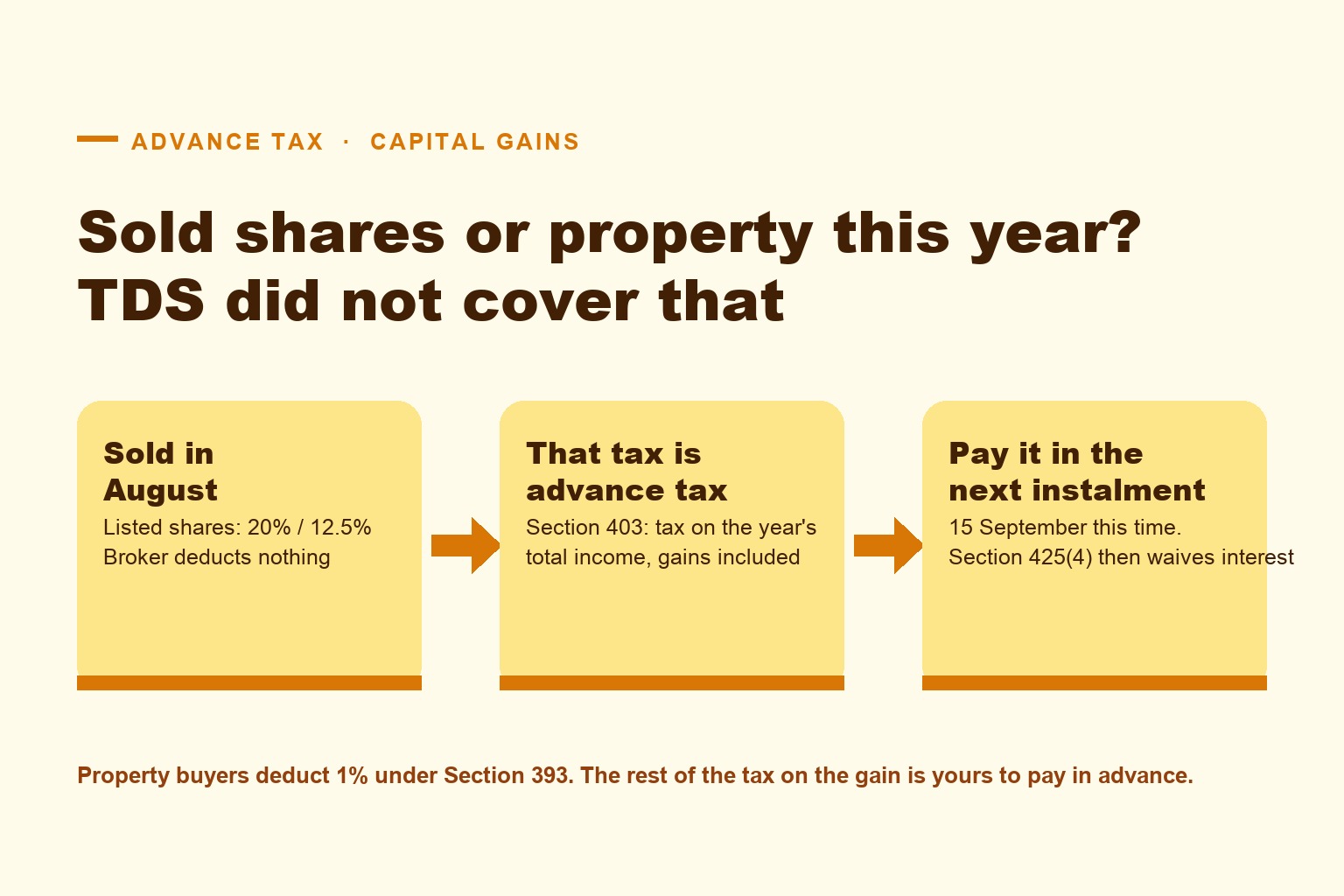
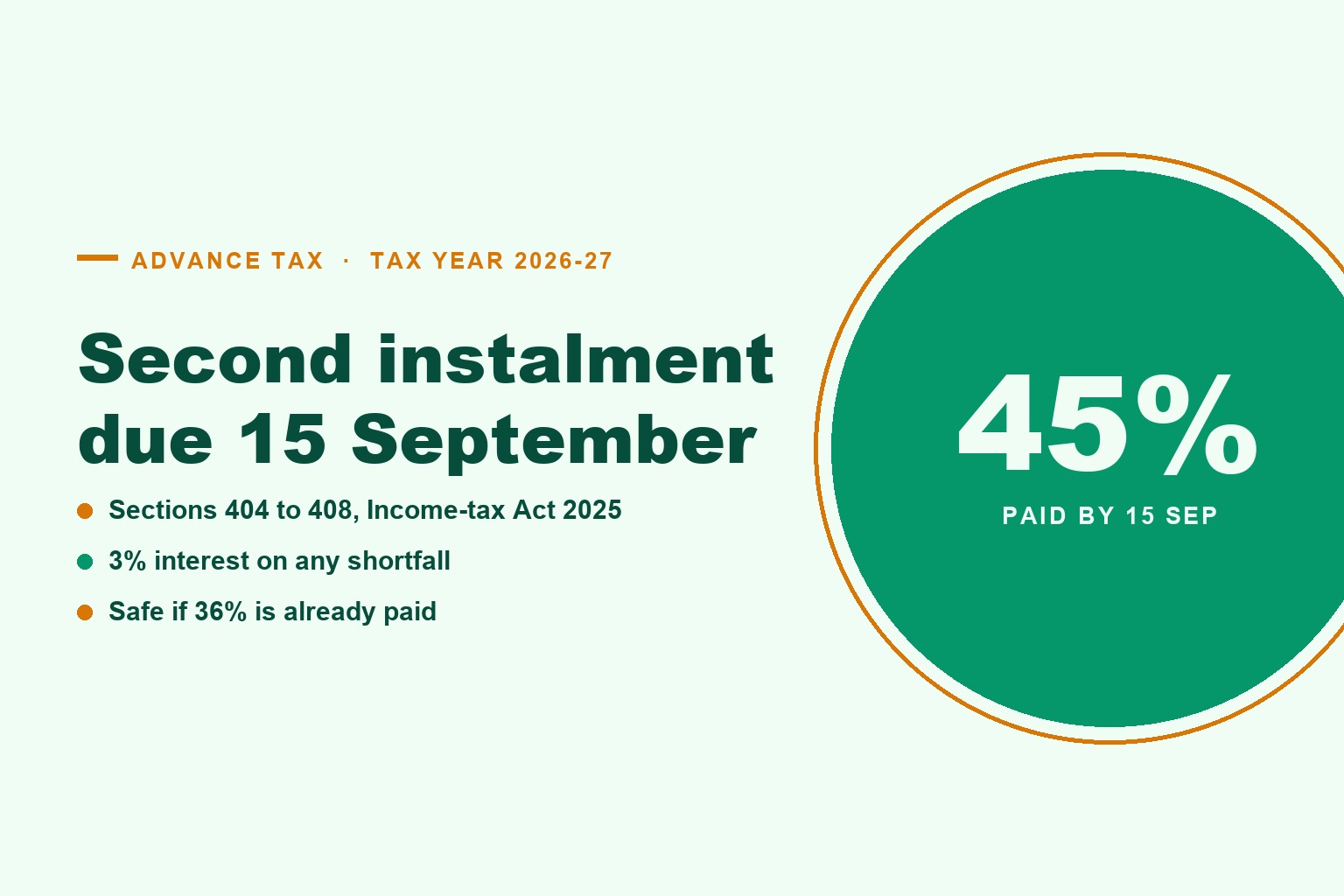
This is the one that catches people, because it is a 2025-Act payment made in the middle of the 1961-Act filing season. The instalment due on 15 September is for tax year 2026-27 — the income you are earning now — under Sections 403 to 408 of the new Act. On e-Pay Tax you choose the Income-tax Act, 2025 first, which brings up challan ITNS 280N, and the year ending 31 March 2027. Pay it on ITNS 280 against AY 2026-27 and you have made an excess self-assessment payment on last year’s return and nothing at all towards this year’s instalment. The arithmetic is in our 15 September 2026 advance-tax article.
Tax audit signed in September 2026
The accounts are FY 2025-26. AY 2026-27, 1961 Act, Section 44AB, Form 3CA or 3CB with Form 3CD, due 30 September 2026. The Department’s Form 26 FAQ says in terms that Forms 3CA, 3CB and 3CD continue for assessment years up to 2026-27. What has changed in that Form 3CD, and the checklist, is in our tax audit AY 2026-27 guide.
Tax audit signed in September 2027
The accounts are FY 2026-27. Tax year 2026-27, 2025 Act, Section 63, Form 26, due 30 September 2027. Our Form 26 guide covers what the single form contains.
TDS deducted on rent paid in April 2026
Deducted under Section 393 of the 2025 Act, because the Act for TDS is the one in force on the earlier of credit or payment, and the deductor’s statement cites the new section. Rent for March 2026 credited or paid in April is the edge case, and our note on the 1 April 2026 TDS transition resolves it by the earlier-of-credit-or-payment test.
A scrutiny notice for AY 2024-25 received in 2026
Income of FY 2023-24, a 1961-Act year. The proceeding continues under the 1961 Act, subject to the savings provisions in Section 536. The new Act does not convert old assessment years into tax years.
5. The forms, side by side
| Filing | For AY 2026-27 (FY 2025-26) | For tax year 2026-27 (FY 2026-27) |
|---|---|---|
| Return of income | ITR-1 to ITR-7 as notified for AY 2026-27 under the 1962 Rules | The return forms under the 2026 Rules |
| Tax audit report | Form 3CA or 3CB, with Form 3CD (as amended by Notification 23/2025) | Form 26, Parts A to D |
| Tax payment challan | ITNS 280 | ITNS 280N |
| Foreign remittance certificate | Form 15CA / 15CB | Form 145 (the FAQ on Form 26 refers to it as the successor to 15CA) |
The wider old-to-new form renumbering under the 2026 Rules is in the Income-tax Rules 2026 explainer. The point of this table is narrower: none of the right-hand column is used for anything relating to FY 2025-26.
6. What people get wrong
- “It is after 1 April 2026, so the new Act applies.” Only to income earned from that date. The FY 2025-26 return, audit and assessment stay under the 1961 Act however late they are filed, revised or completed; only TDS and remittance certificates follow the date of the transaction.
- “FY 2025-26 is tax year 2025-26.” There is no such thing. The tax-year vocabulary begins with tax year 2026-27. FY 2025-26 is AY 2026-27 and nothing else.
- “FY 2026-27 is AY 2027-28.” Not under the new Act. It is tax year 2026-27.
- Using Form 26 for the September 2026 audit. Form 26 is for accounts from 1 April 2026 onwards; the September 2026 report is on Form 3CD.
- Paying the September advance tax on ITNS 280 against AY 2026-27. It is a tax year 2026-27 payment under the 2025 Act, on ITNS 280N.
- Citing new section numbers in a 1961-Act matter. A reply to an AY 2026-27 notice cites Section 44AB, 139(5), 234B. A tax year 2026-27 computation cites Sections 63, 263, 424. Mixing them is a signal to the reader that the writer has not worked out which year they are in.
7. Quick answers
Is AY 2026-27 under the Income-tax Act, 2025? No. It is FY 2025-26 income under the 1961 Act.
What is tax year 2026-27? 1 April 2026 to 31 March 2027, the first year under the 2025 Act.
Which ITR for AY 2026-27? The AY 2026-27 forms under the 1962 Rules, selected against assessment year 2026-27 on the portal.
Which audit form for AY 2026-27? Form 3CA or 3CB with Form 3CD, due 30 September 2026.
When does Form 26 start? Tax year 2026-27; first reports due 30 September 2027.
I file my FY 2025-26 return after 1 April 2026. Which Act? The 1961 Act. The income period decides, not the filing date.
What is the ITR due date for AY 2026-27? 31 July 2026 for most individuals, 31 August 2026 for business or professional income without audit, 31 October 2026 for audit cases, 30 November 2026 for transfer-pricing cases.
Which challan for the 15 September 2026 advance tax? ITNS 280N under the 2025 Act, for the year ending 31 March 2027.
8. Sources
- Income-tax Act, 2025 — Section 3 (tax year), Section 63 (audit of accounts), Section 263(1) (return due dates), Section 393 (TDS), Sections 403 to 408 (advance tax), Section 536 (repeal and savings).
- Income-tax Act, 1961 — Section 2(9) (assessment year), Section 3 (previous year), Section 44AB, Section 139(1) Explanation 2 as amended by the Finance Act, 2026 for AY 2026-27 (31 August date for non-audit business cases), Section 139(4) and (5).
- Income Tax Department, Form No. 26 — Frequently Asked Questions, FAQ 2, 5 and 6.
- Income Tax Department, FAQs on interplay and transition between the Income-tax Act, 1961 and the Income-tax Act, 2025 (incometaxindia.gov.in), on which our earlier transition explainer is based.
- Income Tax Department e-filing portal, e-Pay Tax: selection of the applicable Act; challans ITNS 280 and ITNS 280N.
Dates are as at 7 September 2026 and assume no extension of the AY 2026-27 due dates. Take advice from a Chartered Accountant on a specific position.



Comments (0)
No comments yet. Be the first to comment!