
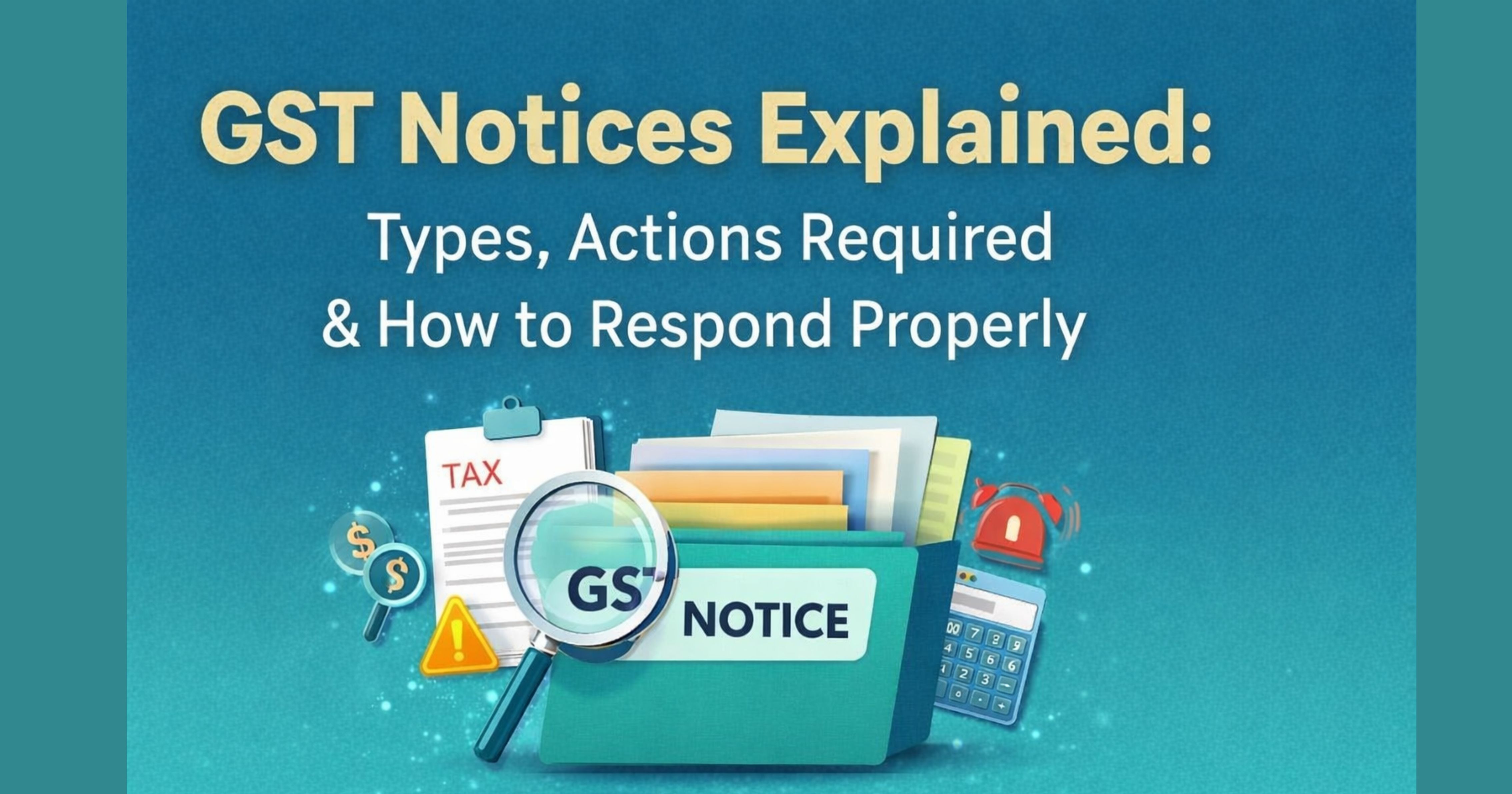

GST notices are a regular part of compliance, but many taxpayers panic because they don’t clearly understand what each notice means or how serious it is. In reality, most notices are routine communications from the department to seek clarification, highlight discrepancies, or ensure compliance.
If they are reviewed carefully and responded to within the prescribed time, they can usually be handled smoothly without major consequences. The real risk arises only when notices are ignored or delayed, which can lead to penalties, demand orders, or even cancellation of registration.
1. GSTR-3A – Return Not Filed
Issued when GST returns are not filed. Taxpayers must file pending returns within the given time, failing which best judgment assessment may be done.
2. ASMT-10 – Discrepancy Notice
Sent when mismatches are detected in returns or data. The taxpayer must either explain the difference or accept and pay tax.
3. ASMT-14 – Notice to Unregistered Persons (Section 63)
Issued when a person liable to register has not done so, or continues business after cancellation. The officer may proceed with best judgment assessment after giving an opportunity to respond.
4. REG-03 / REG-17 – Registration Notices
REG-03 seeks clarification during registration. REG-17 is a show cause notice for cancellation. A proper reply is critical to avoid rejection or cancellation.
5. REG-21 – Revocation of Cancellation
If registration is cancelled, the taxpayer can apply for revocation in REG-21 after filing pending returns and clearing dues. If the officer is not satisfied, a notice in REG-23 may be issued, which must be replied through REG-24.
6. CMP Notices (Composition Scheme)
CMP-05 is issued for violations, CMP-06 is the reply, and CMP-07 is the final order. Taxpayers may need to pay tax or exit the scheme.
7. Refund Notices (RFD-08 / RFD-09)
RFD-08 is a show cause notice before refund rejection. The taxpayer must respond through RFD-09 with supporting documents.
8. DRC-01 – Tax Demand Notice
Issued under Section 73 or 74 for tax shortfall. The taxpayer must either pay the demand or submit a reply.
9. E-Way Bill Proceedings (MOV Series)
MOV-07 (SCN for detention) and MOV-10 (confiscation) are issued in case of discrepancies during movement of goods.
Conclusion
GST notices are not always penalties—they are often opportunities to identify and correct mistakes before they become serious issues. In many cases, the department is simply seeking clarification or giving the taxpayer a chance to comply properly. A timely and well-prepared response, supported by proper documentation, can resolve most matters without escalation. However, delays or incorrect replies can convert a simple notice into a demand, penalty, or legal proceeding. Taking professional guidance ensures that responses are accurate, complete, and aligned with the law, helping avoid unnecessary risks.



Comments (0)
No comments yet. Be the first to comment!