
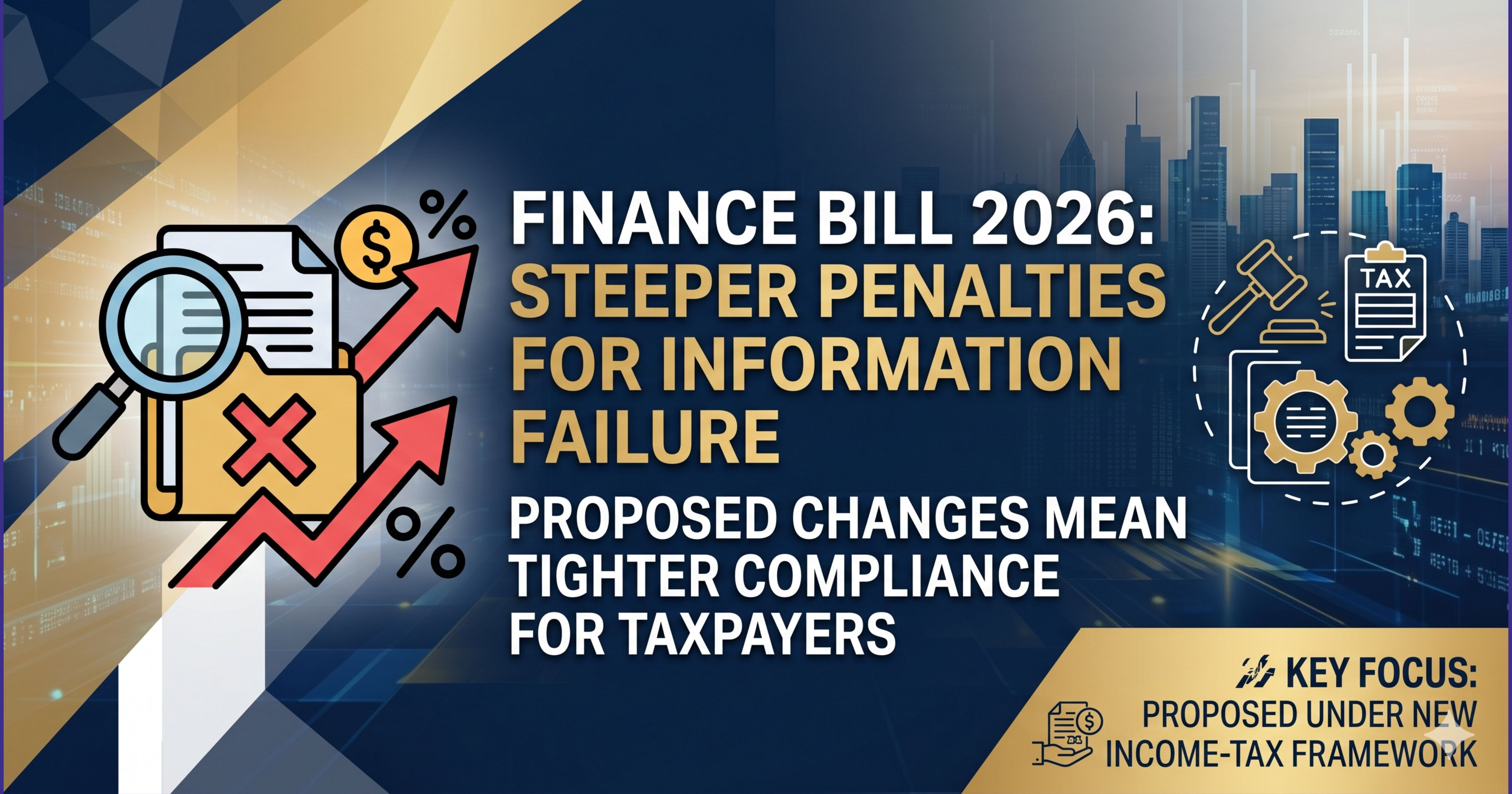
The upcoming changes under the proposed new income-tax framework are set to significantly tighten compliance requirements for taxpayers. One of the key proposals highlighted in the Finance Bill, 2026 is a steep increase in penalty for failure to furnish business-related information when requested by tax authorities.
🔍 What is being proposed?
Under the proposed provisions:
- Tax authorities are empowered to call for information and inspect business premises (similar to existing powers)
- In cases where a taxpayer fails to provide the required information or does not cooperate, a penalty may be imposed
- The proposed penalty is ₹25,000, compared to the earlier nominal penalty of ₹1,000
This marks a 25-fold increase, clearly indicating the government’s intent to enforce stricter compliance.
⚖️ Legal positioning (important clarity)
It is important to understand the correct legal structure:
- The power to seek information is proposed under Section 254 of the new framework
- The penalty for non-compliance is covered under Section 466
Many discussions online incorrectly attribute the penalty directly to Section 254. However, Section 254 deals with powers of tax officers, while the penalty provision is separately defined.
📅 Applicability
- The revised penalty structure is proposed to be effective from 1 April 2026
- It forms part of the broader effort to streamline and modernize tax administration
🧠 What this means for taxpayers
This change reflects a clear shift towards:
- Greater accountability during tax proceedings
- Reduced tolerance for delays or non-cooperation
- Stronger enforcement of information-sharing obligations
Even routine notices or requests for documents may now carry higher consequences if ignored.
✅ Practical action points
Taxpayers, especially businesses, should start preparing:
- Maintain proper and updated records
- Ensure timely response to notices and information requests
- Strengthen internal processes for compliance tracking
- Avoid casual or delayed replies to tax authorities
📢 Final takeaway
While the proposal is yet to be fully operationalized under the new law, the direction is clear — non-compliance will become significantly more expensive.
For Chartered Accountants and tax professionals, this is a critical area to guide clients proactively and ensure they are fully prepared for the upcoming regime.


Comments (1)
Thanks for sharing. Nice Article.